This post may contain affiliate links via Amazon’s affiliate advertising program. See privacy policy
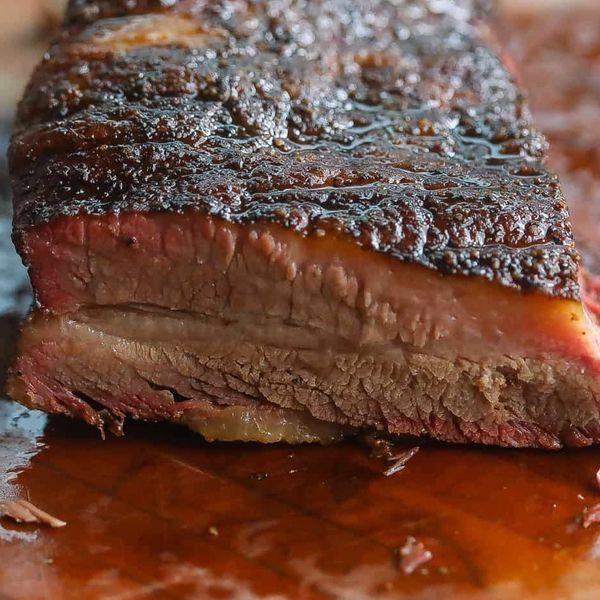
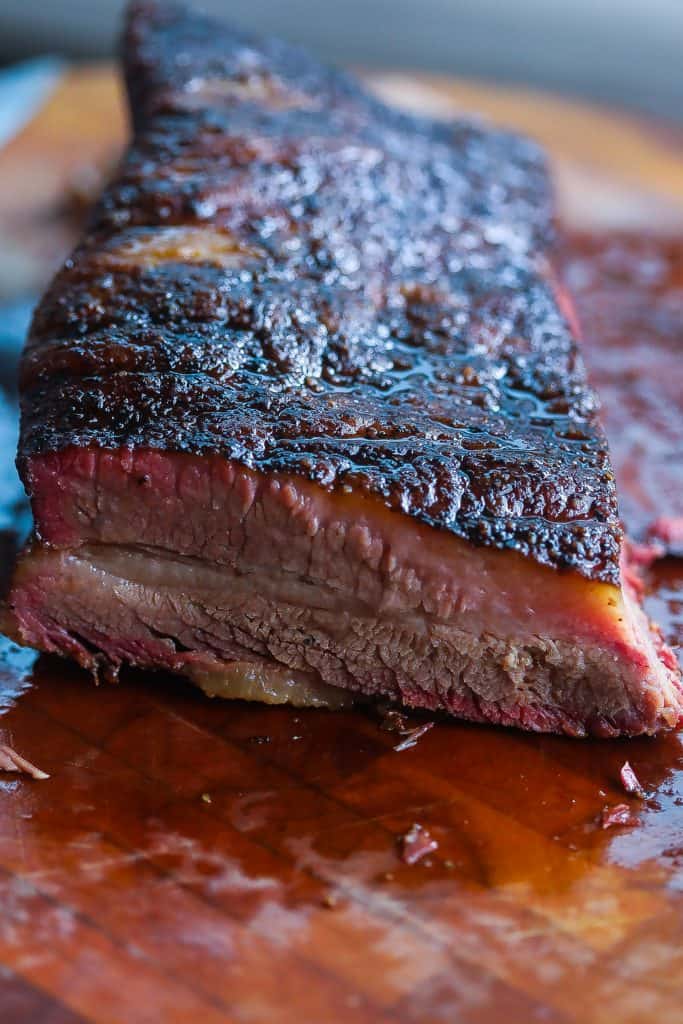
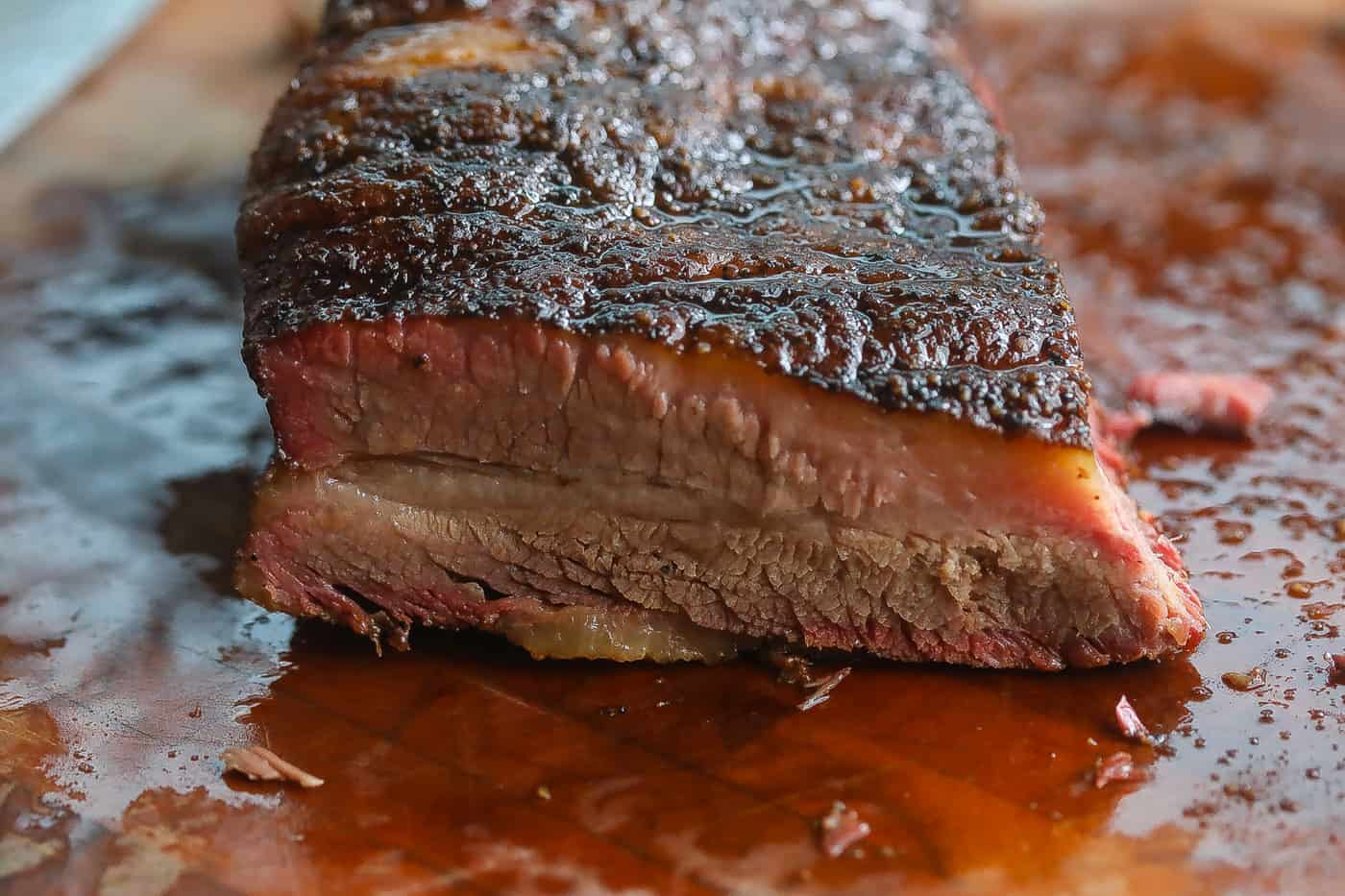
Texas-style smoked beef brisket is barbecue stripped down to its essentials – coarse black pepper, salt, hardwood smoke, and enough patience to let time and fire do their thing. This brisket comes out with that signature Central Texas bark on the outside while the inside stays rich, buttery, and slice-apart tender, thanks to a low-and-slow smoking technique that slowly renders the fat and builds deep beefy flavor.
It’s a dish rooted in Texas barbecue tradition where pitmasters treat brisket like a craft, chasing that perfect balance of smoke ring, bark, and juicy texture that makes every slice worth the wait.
Technique: Low-and-slow smoking with extended rest time
In many ways, smoking brisket is an exercise in minimizing variability in things like temperature, quality of the meat, types of seasoning, etc.
This technique teaches patience. You’ll meet the stall – that moment when the temperature stops rising and doubt starts talking. This is where you trust the fire, stop chasing numbers, and let the meat breathe. Low heat melts collagen into gelatin while smoke builds bark on the surface.
The rest allows juices to redistribute, turning slices supple instead of crumbly. This feels right because it’s familiar; fires burning steady, meat cooking all day, stories stretching longer than the smoke. Brisket isn’t rushed food; it’s time honored.
What Is “The Stall”?
The stall is the phase during smoking brisket when the meat’s internal temperature stops rising, usually around 150–170°F – because moisture evaporating from the surface cools the brisket at nearly the same rate the smoker is heating it. This evaporative cooling is like sweat on skin: as collagen breaks down and juices push outward, that moisture slows temperature gain, making it feel like the cook is stuck. The stall isn’t a problem, it’s a sign the brisket is tenderizing, fat is rendering, and bark is forming, and once surface moisture reduces (or the brisket is wrapped), the temperature begins climbing again toward finish.
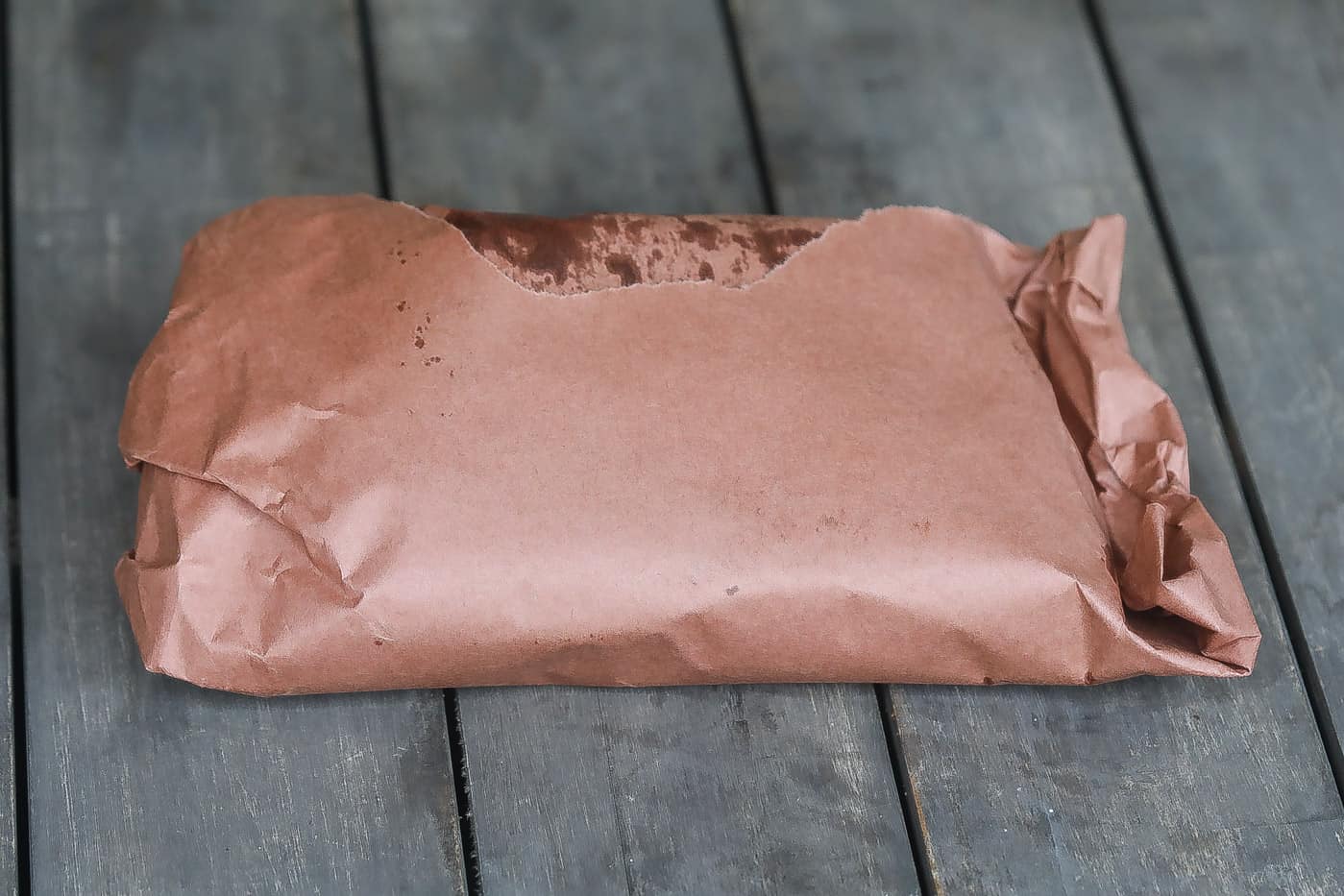
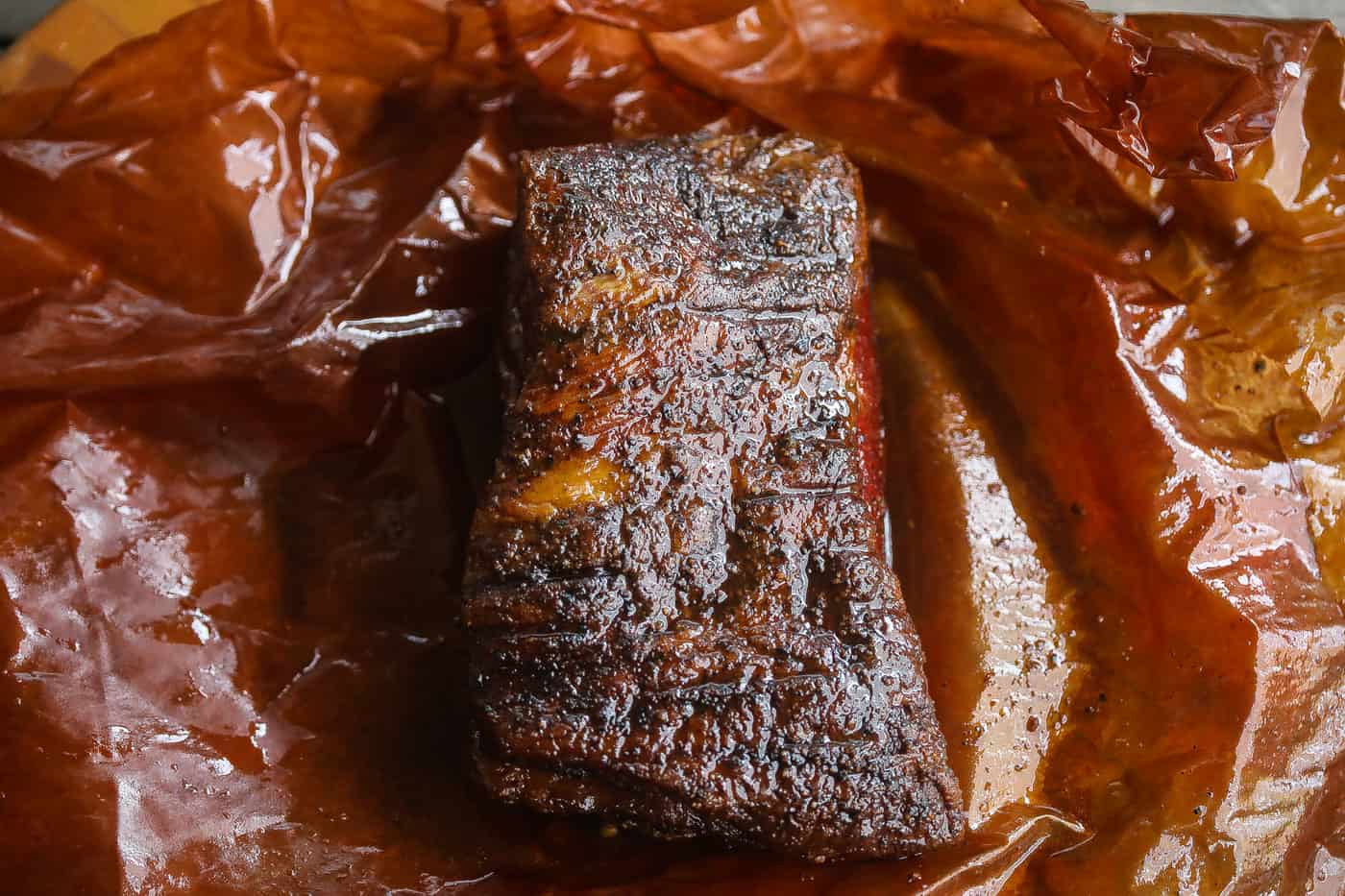
To overcome the stall and achieve the desired internal temperature for a tender brisket, some pitmasters use the “Texas crutch” method. This involves wrapping the brisket in butcher paper during the stall to reduce moisture evaporation, speed up the cooking process, and preserve the meat’s tenderness. The stall is a natural part of the smoking process, and being patient during this phase is essential to attain a deliciously tender smoked brisket.
Flavor Profile
This smoked brisket delivers bold beefiness up front, followed by peppery bite and deep smoke that lingers on the tongue. The fat renders into silk, while the bark brings crunch, contrast, and savory depth.
Key Flavor Ingredients (and Why Texas Keeps It Simple)
Beef Brisket Packer (Flat + Point): The full cut gives you balance—the lean flat for clean slices, the fatty point for rich, juicy bites and burnt ends.
Kosher Salt: Seasons deeply and helps retain moisture, pulling flavor into the meat over long cook times.
Coarse Black Pepper: Builds bark and delivers sharp, earthy heat that defines Texas-style brisket.
What to do with those leftovers is always the question, For ideas checkout these leftover brisket recipes.
Why This Works
Beef brisket packer does the job of providing connective tissue and fat, which slowly break down into gelatin. This creates tender slices with rich mouthfeel.
Low-and-slow smoking does the work of rendering fat gradually, which creates moisture and depth without drying the meat. Texas pit traditions been repping this for years – it’s where steady fire matters more than speed.
Kosher salt and coarse black pepper do the job of amplifying beef flavor without masking it, which creates bold bark and clean taste. The influence comes from German and Czech meat-smoking influence in Texas, where simplicity ruled.
Rest time does the work of redistributing juices, which creates sliceable, juicy brisket instead of crumbling beef.
Flat vs Point End (Brisket Breakdown)
A full whole brisket (packer) consists of two cuts.
Flat: Leaner, uniform, best for slicing. It is typically rectangular in shape and has a consistent thickness. This portion is characterized by its relatively low fat content and a more even grain. It’s often preferred for slicing as it yields slices with a consistent texture and thickness.
This is an example of a flat cut
Point: Thicker, fattier, more forgiving—perfect for chopped brisket or burnt ends. It is irregular in shape and contains more fat marbling and connective tissue. The point is known for its rich, juicy, and tender qualities. It has a more intricate grain and is excellent for making burnt ends or diced for stews and other dishes.
Cooking a full packer gives you both textures in one cook, just like Texas intended.
Point cut brisket
How to Slice Brisket (Without Ruining It)
Always slice against the grain. The flat and point run in different directions, so rotate the brisket as needed. Thick pencil-width slices keep the meat juicy and intact.
Recipe Variations & Substitutions
No coarse black pepper? Use cracked pepper blend instead. It delivers similar heat, though the bark will be slightly softer. This reflects regional pit adaptations across Texas towns.
No packer cut available? Most stores will offer a flat, less will offer the point. If using brisket flat be mindful of cooking time as it will require less overall and you run the risk of overcooking.
Beats and Eats
Pair with:“Smokestack Lightning” by Howlin’ Wolf
This pairing works because the song is raw, gritty, and powerful just like a pit burning through the night. The blues howl matches the smoke rolling slow, heavy, and unapologetic.
Test Kitchen Tips for Best Results
Choose the highest-quality brisket you can afford. With quality you’re looking for marbling; the more the better. In addition to quality, brisket comes in different sizes and cuts. You won’t a “packer cut” ideally; this cut includes the flat lean cut plus the fatty point cut. Some stores will sell one or the other cut, but when the full packer is available choose it. Grass fed and grain fed will cook at different speeds.
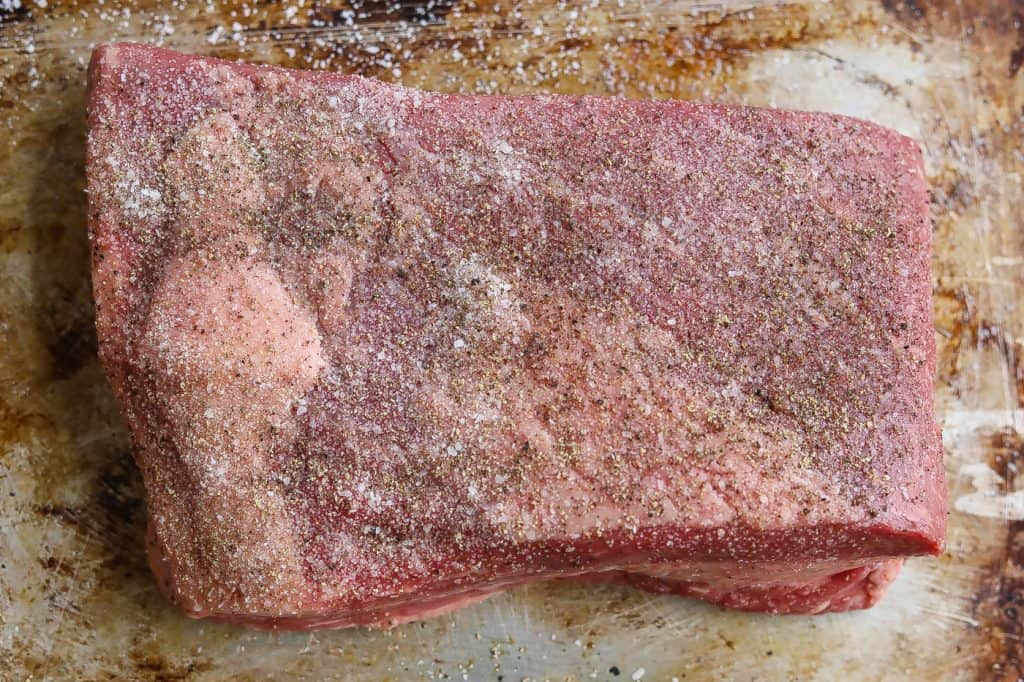
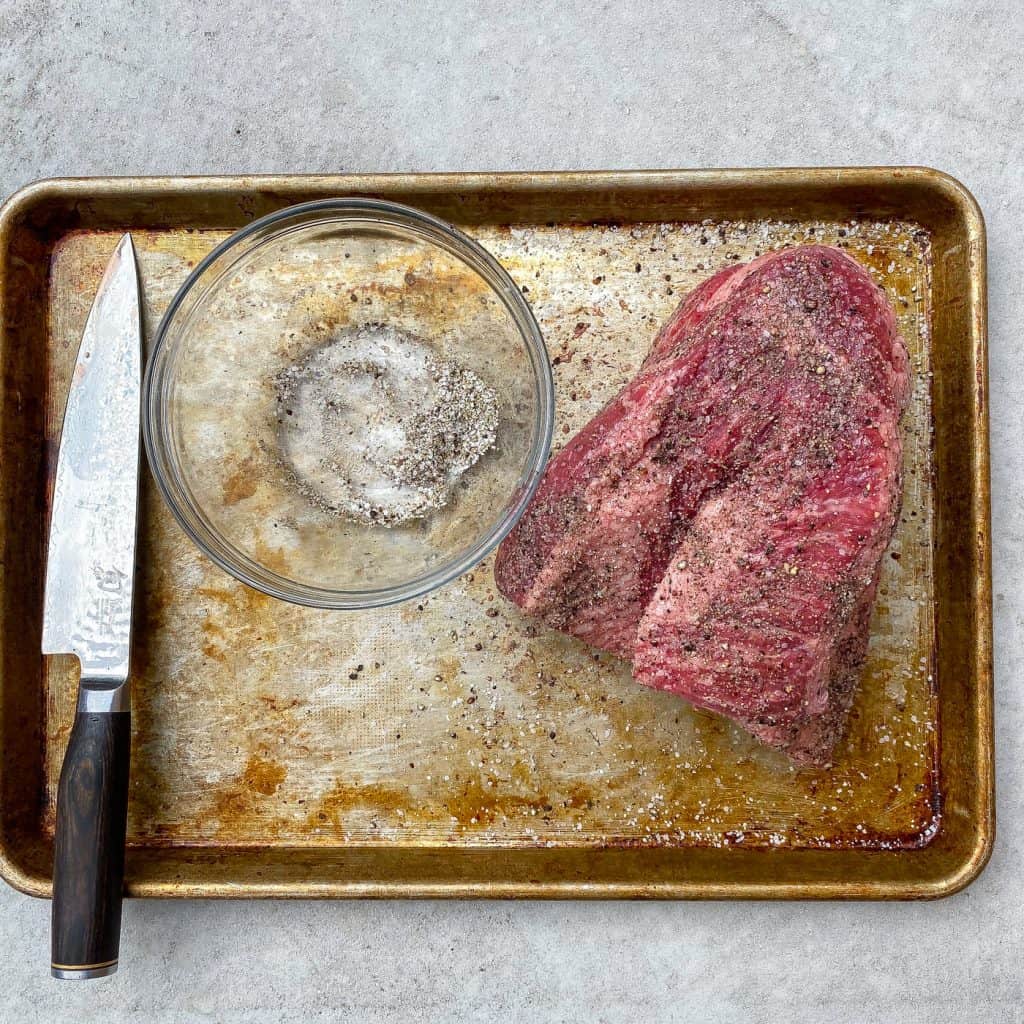
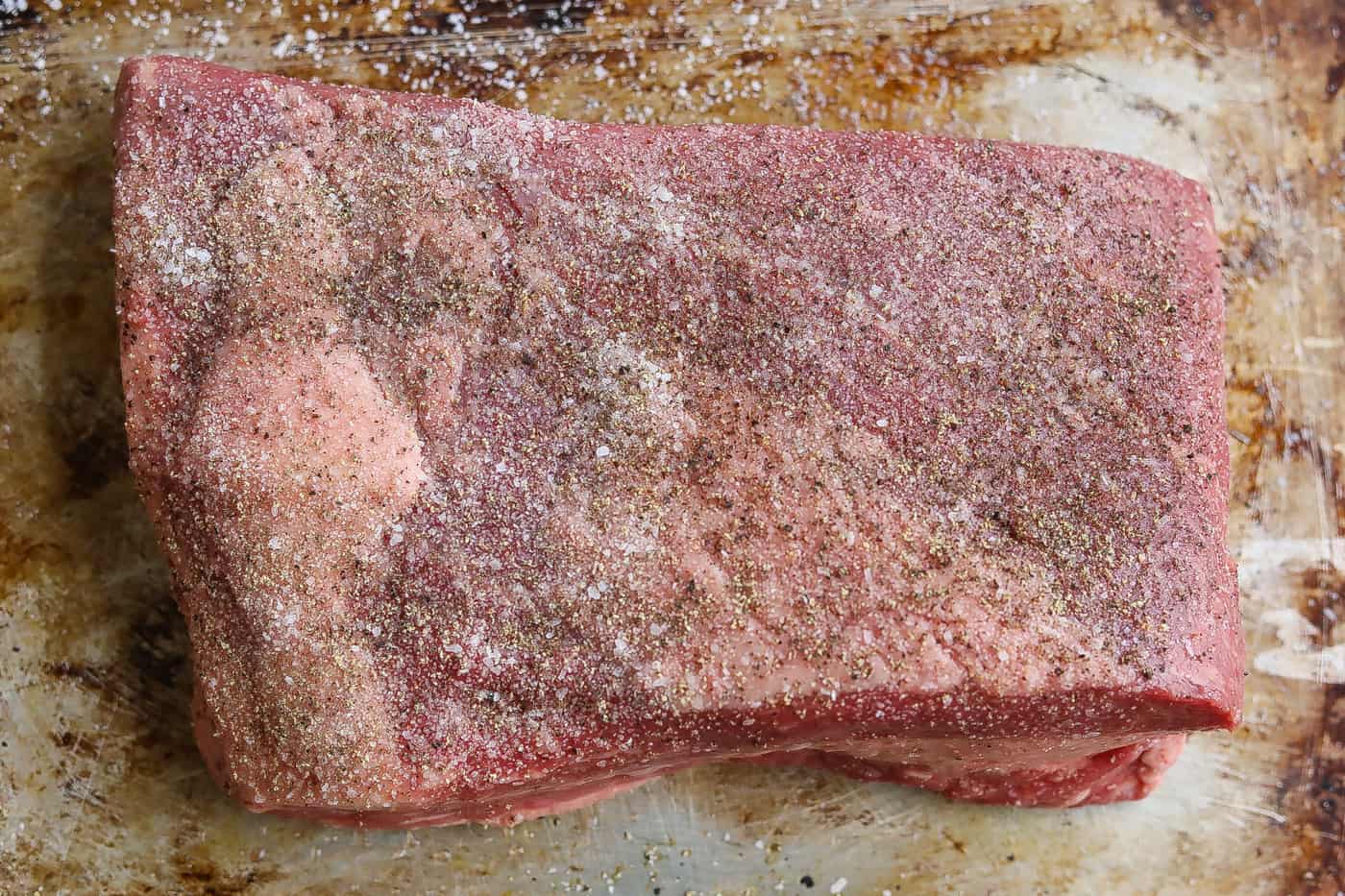
Season with lots of coarse pepper and coarse salt. You really don’t need anything else or trickery. Trust the process. The big thing is to create a nice even layer on both sides.
Place the brisket in the smoker on either side. It’s mostly a personal preference. I like fat side down to get a little more of a crust with the fatty parts. I do however make sure I cook the fattiest portion (point cut) closest to the hottest part of my smoker with the thinner, flat cut facing away.
Temperature control varies by types of smoker, which makes it hard to give specific recipe directions for brisket. Ultimately you want to stay between 225-250 degrees F for the duration of the cooking. Cooking at too high temps will be problematic and leave you with tough, dry brisket. Likewise you don’t want to be constantly checking on the meat. Every time you open the lid the temperature drops. Good smokers or familiarity with your personal smokers allow you to set it (temp) and forget it which is ideal.
About 3-4 hours into smoking your brisket will undoubtedly hit the “stall.” The stall refers to a point in time when after a steady progressive increase in internal temps your brisket will literally stall at a certain temp for a few hours. Don’t panic as this is normal. Stay the course, trust the process.
Optional step: Keep butcher paper on hand to wrap your brisket along the way. This is like a cheat code to super moist brisket. You literally wrap the brisket tightly in the paper and then return it to the grill to finish cooking at 225 degrees F until the internal temps of the brisket reach about 200 degrees at the brisket’s thickest point. Butcher paper is nothing something I normally have on hand, so I just keep with the low and slow process and allow time and temp to break through the stall
Rest the brisket, like for an unusually long time, as in at least an hour, but longer if you have the time. I like to place my still wrapped brisket in a cooler topped with towels. The rest is critical as it allows all those juices to trickle into all the different parts of the meat’s interior.
Don’t slice the brisket until it has fully rested!If slicing a packer cut, split the point cut from the flat cut first and then slice each against their respective grains. Pay attention cause the grains go in different directions for the respective cuts.
Wood smoke matters so choose a high-quality source. Hardwoods like cherry, apple, oak, maple, and pecan are great choices. I avoid mesquite because it has such a strong flavor which is not a good thing with such a long cook time. If using charcoal go with a good lump coal option.
This recipe is for packer cut, but holds true for separate flat or point cuts if only one is available.
Save the fat cap and use it as a seasoning in other recipes like braised cabbage. When you cook brisket fat all that rendered good stuff makes for a prime flavoring agent.
If you make this smoked beef brisket recipe or any other from the site, please come back and leave me a comment below with your feedback.
Definitely take a photo of the dish and be sure to tag #foodfidelity so that I can see them.
You can also keep up with my food exploits as well as original recipes! You can find me on Instagram, Facebook, Twitter, and Pinterest. If you like any of the music you find on the site, visit me at Spotify to find curated monthly playlists.
Lastly, go to my YouTube channel and subscribe to be notified when new weekly videos are uploaded.
Ingredients
12 to 14lbpacker cutflat and point cuts beef brisket, fat trimmed to ¼ inch
½cupkosher salt
½cupfreshly ground black pepper
Method
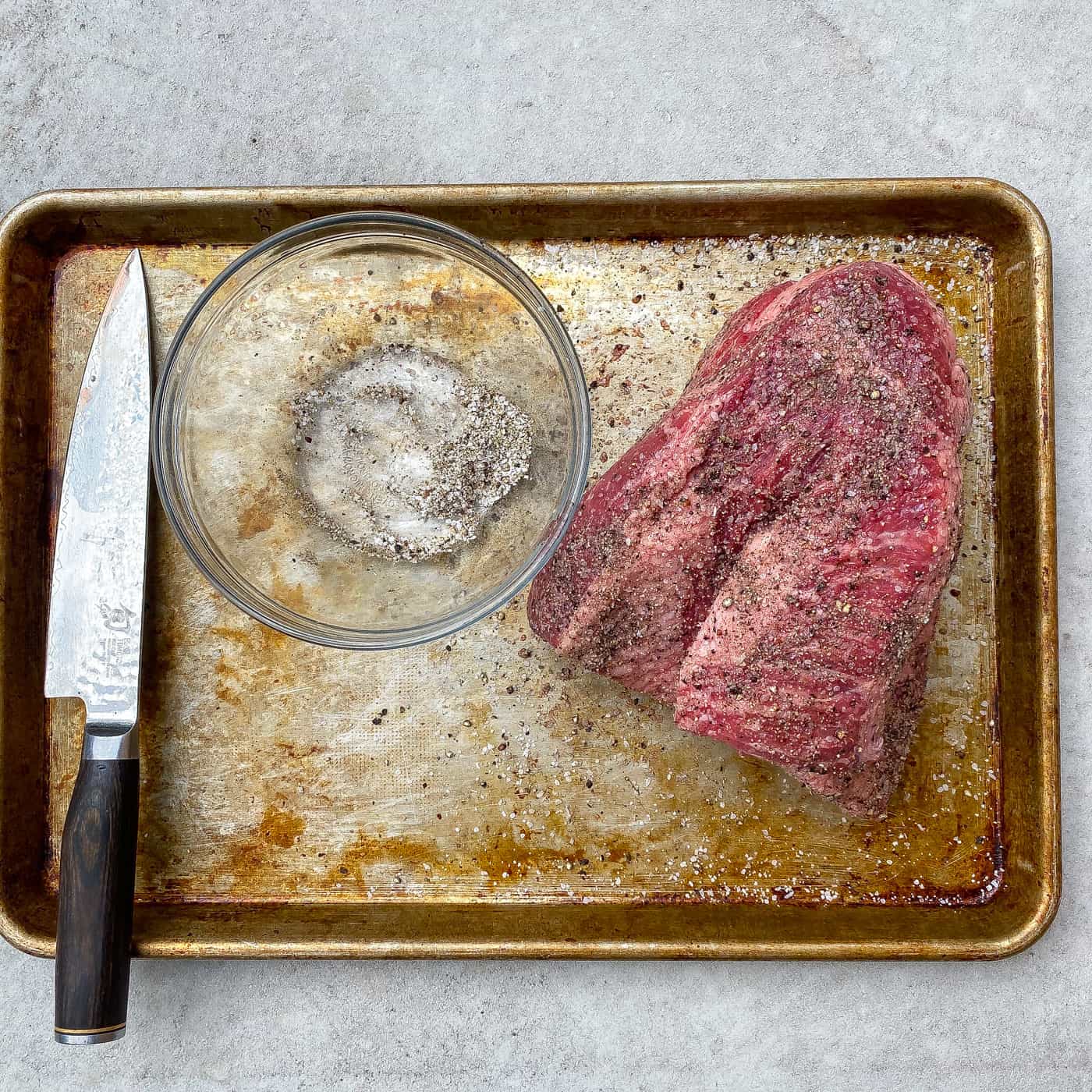
Combine the salt and freshly ground black pepper in a mixing bowl, then evenly season the brisket on all sides. Leave the brisket out to allow to reach room temperature
Prepare the smoker for indirect cooking. Bring the temperature to 250° F.
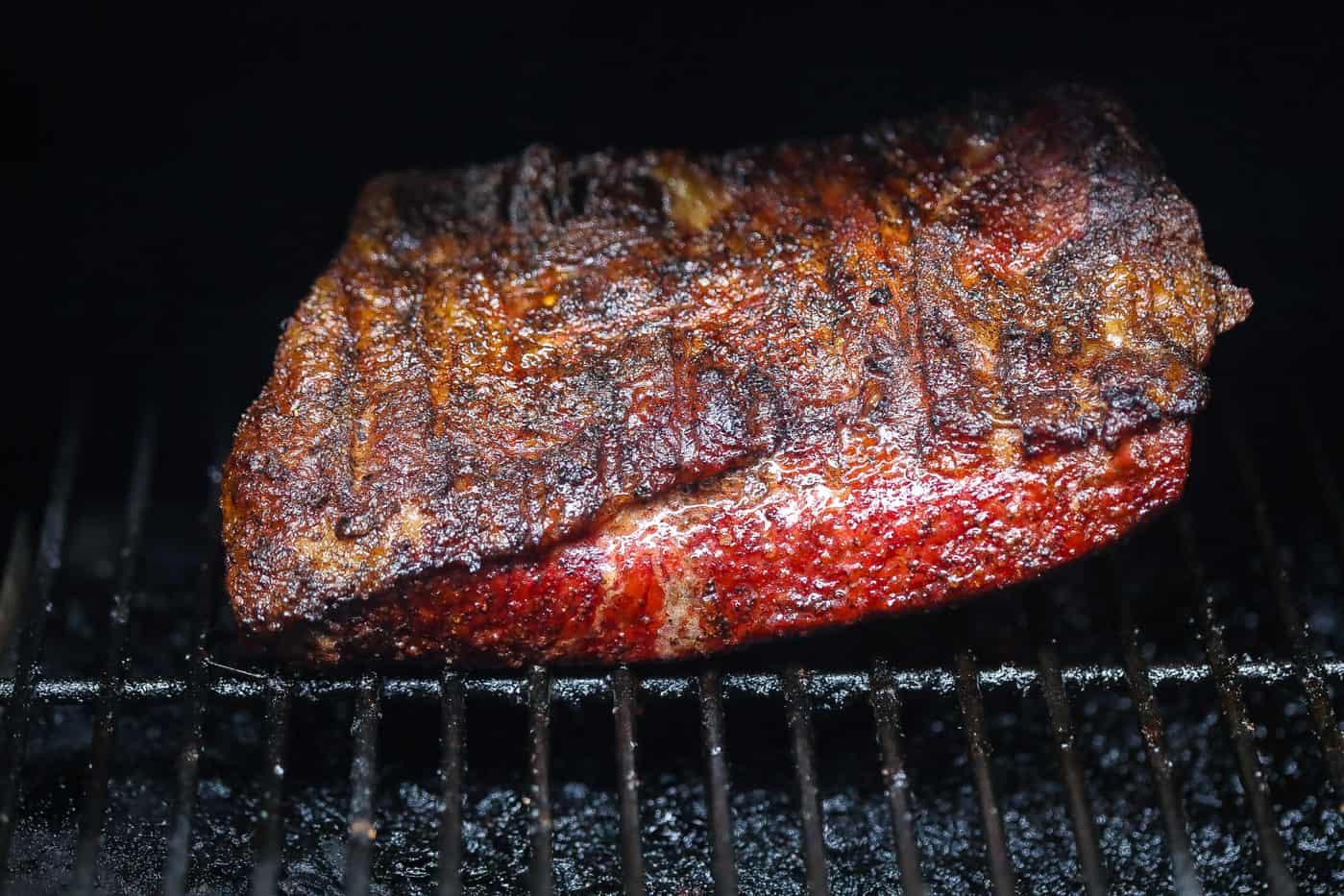
Place the brisket in the smoker with the fatty point tip closest to the heat. Leave the lid closed for 6 to 8 hours until dark brown bark is formed and the internal temperature is 165° F. Avoid peeking and leave the lid closed.
Remove the brisket from the smoker and wrap it tightly in butcher paper. Place it back in the smoker and continue cooking until the internal temperature reaches between 200 and 205° F°.
Carefully transfer the wrapped brisket to a cooler. Top with old towels, close the lid and let it rest for at least 1 to 2 hours before slicing it.
To slice the brisket, separate the flat from the point cut. Slice both against their respective grains. Enjoy
Choose the highest-quality brisket you can afford. You don’t have to go all wagyu beef, unless you got it like that, but quality does matter. With quality you’re looking for marbling; the more the better. In addition to quality, brisket comes in different sizes and cuts. You won’t a “packer cut” ideally; this cut includes the flat lean cut plus the fatty point cut. Some stores will sell one or the other cut, but when the full packer is available choose it. Grass fed and grain fed will cook at different speeds.
Season with lots of coarse pepper and coarse salt. You really don’t need anything else or trickery. Trust the process. The big thing is to create a nice even layer on both sides.
Place the brisket in the smoker on either side. It’s mostly a personal preference. I like fat side down to get a little more of a crust with the fatty parts. I do however make sure I cook the fattiest portion (point cut) closest to the hottest part of my smoker with the thinner, flat cut facing away.
Temperature control varies by types of smoker, which makes it hard to give specific recipe directions for brisket. Ultimately you want to stay between 225-250 degrees F for the duration of the cooking. Cooking at too high temps will be problematic and leave you with tough, dry brisket. Likewise you don’t want to be constantly checking on the meat. Every time you open the lid the temperature drops. Good smokers or familiarity with your personal smokers allow you to set it (temp) and forget it which is ideal.
About 3-4 hours into smoking your brisket will undoubtedly hit the “stall.” The stall refers to a point in time when after a steady progressive increase in internal temps your brisket will literally stall at a certain temp for a few hours. Don’t panic as this is normal. Stay the course, trust the process.
Optional step: Keep butcher paper on hand to wrap your brisket along the way. This is like a cheat code to super moist brisket. You literally wrap the brisket tightly in the paper and then return it to the grill to finish cooking at 225 degrees F until the internal temps of the brisket reach about 200 degrees at the brisket’s thickest point. Butcher paper is nothing something I normally have on hand, so I just keep with the low and slow process and allow time and temp to break through the stall
Rest the brisket, like for an unusually long time, as in at least an hour, but longer if you have the time. I like to place my still wrapped brisket in a cooler topped with towels. The rest is critical as it allows all those juices to trickle into all the different parts of the meat’s interior.
Don’t slice the brisket until it has fully rested!If slicing a packer cut, split the point cut from the flat cut first and then slice each against their respective grains. Pay attention cause the grains go in different directions for the respective cuts.
Fuel matters so choose a high-quality source. Hard woods like cherry, apple, oak, maple, and pecan are great choices. I avoid mesquite because it has such a strong flavor which is not a good thing with such a long cook time. If using charcoal go with a good lump coal option.
Notes.. Above information is curated for evaluation and recommendation from foodfidelity.com
Continue to Read the full article and learn more about the author: Smoked Beef Brisket